
Rapid Return hip replacement
Rapid Return is a minimally invasive hip surgery that supports long-term joint health and helps you return to the life you love faster.
This webpage was reviewed for clinical accuracy by Dr Arj Imbuldeniya, Consultant Orthopaedic Hip and Knee Surgeon.

A successful hip operation isn't just about what happens in the operating theatre.
It's also about how you move and live once you're back home. Rapid Return hip surgery helps you get back to the life and activities you love, faster.
This surgery is not only about replacing the hip joint. It focuses on what matters most to patients, like walking without pain, sleeping well, exercising, and enjoying everyday life with confidence.
Unlike traditional hip replacement, Rapid Return uses a minimally invasive surgical technique called the Röttinger® approach, which helps preserve the muscles around your hip. By protecting this important anatomy, Rapid Return surgery helps you stay strong and reduces the need for a long recovery.
Your procedure will be carried out by Dr Arj Imbuldeniya, who specialises in hip and knee surgery. With over 25 years in orthopaedics, he is one of only a small number of surgeons in the UK trained in this specialist technique.
You’ll also benefit from support at every stage with Cromwell Hospital’s comprehensive care pathway. This includes onsite scans for surgical planning, expert recovery teams, and ongoing guidance. Most patients start walking within hours, return home the next day, and feel more confident moving again compared with traditional hip surgery methods.
The benefits of Rapid Return hip replacement include:
- Faster discharge – Around 95% of patients return home within 24 hours of their operation, and many are medically fit enough to leave the same day.
- Freedom to move – Because the muscles around the hip are preserved, patients can move freely without the usual restrictions.
- Faster return to activity – Return to the life and activities you love within weeks, not months.
- Reduced pain – The minimally invasive approach used means many patients feel less pain after surgery.
- More natural movement – Preserving your natural anatomy helps your new hip feel stable and confident.
Why choose us?
When you choose Cromwell Hospital for your Rapid Return hip replacement, you’ll also receive:
Specialist expertise – Your surgery will be carried out by Dr Arj Imbuldeniya. He trained in the Röttinger® approach at the centre where it was developed in Munich, by three high-volume German experts in the technique. He is one of few UK-based surgeons offering this procedure within an integrated pathway.
Experienced theatre team – Cromwell Hospital’s orthopaedic theatre team has extensive experience supporting Röttinger® hip replacement. Combined with an experienced and highly trained surgeon, this helps deliver a smoother recovery.
Personalised support – From initial consultation through to surgery and aftercare, our team will be with you every step of the way.
Transparent pricing – Our all-inclusive package means that there’s no hidden costs, so you can focus on your recovery.
Rapid access to care – With no waiting lists, you'll be seen and treated faster.
Your surgeon: Dr Arj Imbuldeniya
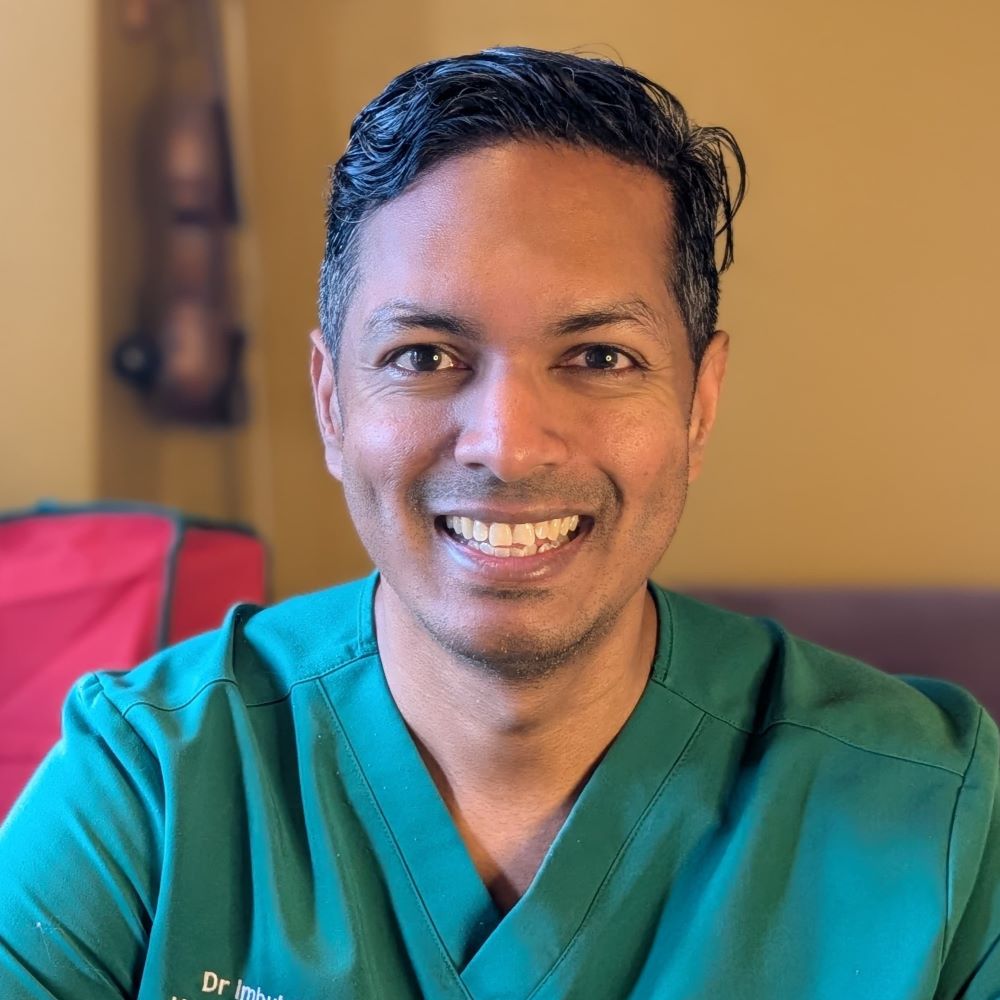 Dr Arj Imbuldeniya is a consultant orthopaedic surgeon specialising in hip and knee surgery. He has over 25 years of experience in orthopaedics, including over 10 years as a consultant.
He trained in the Röttinger® approach at OCM Munich, where the technique was developed. As part of his training, he has visited the centre twice, observing surgery and operating under supervision; completed two specialist training courses on the technique; and gained hands-on experience with an expert surgeon at Cromwell Hospital. He performed his initial procedures within the NHS and at Cromwell Hospital, with supervision from a leading expert.
Around 95% of his patients go home within 24 hours of surgery. They can enjoy moving without the traditional precautions, such as avoiding crossing their legs, bending too far, or side sleeping.
Dr Imbuldeniya's approach focuses on long-term joint health. For patients, this means receiving the right treatment – whether surgical or non-surgical – at the right time, sequenced with optimisation of your biological health to improve your outcomes.
Having surgery
Rapid Return hip replacement is carried out under spinal anaesthesia with sedation, rather than a general anaesthetic. You may worry about being awake, but the sedation helps you feel calm and comfortable. Many patients sleep through the operation and don’t remember it.
With a spinal anaesthetic, you avoid the stronger effects of a general anaesthetic. This means you usually feel clearer, less sick, and ready to move sooner after surgery. Your hip will stay numb for the first few hours, which helps reduce pain and means you need fewer strong painkillers as you recover.
Your surgeon will use the Röttinger® approach. This involves accessing the hip joint via a natural interval between two muscles, rather than cutting through them. It helps preserve the strength of the hip, which usually means you’ll experience less pain and a faster recovery. This is known as a muscle-sparing technique.
The damaged hip joint is then removed and replaced with a modern prosthetic joint. The new joint is usually made from either ceramic, titanium, or polyethylene, and is designed to enable smooth movement. Throughout the procedure, special instruments are used to minimise disruption to the surrounding tissues.
The operation itself usually takes about 45 to 60 minutes. Including the anaesthetic, preparation, and recovery time, you’ll typically be in the operating theatre for around 90 to 120 minutes in total.
After surgery
Once the procedure is complete, you’ll be moved to a recovery room. When you’re feeling better, usually a few hours after surgery, a physiotherapist will help you begin to move freely, stand, and try the stairs. Early movement is important to your recovery and is made possible by the muscle-sparing technique used.
Recovery
Most patients feel confident enough to go home the day after surgery. Before you leave the hospital, you'll be given clear guidelines to support your recovery.
It’s normal to experience mild thigh pain and discomfort for up to two weeks following the procedure. This is manageable with pain medication.
Swelling and bruising around the hip, thigh, calf, and ankle are common on the operated side. This is often caused by the blood thinning medication you must take for 35 days after surgery to reduce risk of a blood clot. These symptoms will settle as your recovery progresses.
You’ll go home with a water-resistant dressing in place over the surgical site. You must keep this clean and dry until your follow-up appointment, around two weeks post-procedure, where it will be removed.
Physiotherapy will continue after you return home. This helps to strengthen the muscles and restore movement. It is recommended for at least six weeks.
The Röttinger® approach is a muscle-sparing surgical technique where your surgeon works between the muscles to reach the hip, instead of cutting through them. This means the muscles stay stronger and don’t need as much time to heal. Because of this, many patients start walking again just a few hours after surgery.
The Röttinger® approach was developed by Dr Heinz Röttinger in Munich.
In traditional hip replacement surgery, surgeons need to cut through muscles and tendons to reach the hip. This means the body takes longer to heal, so recovery is usually slower and there can be more pain in the early weeks after surgery.
Rapid Return hip replacement surgery is different because it uses the Röttinger® approach. This is a technique where surgeons work between the muscles instead of cutting through them, which helps keep the muscles strong. Because of this, people usually feel better sooner, move more easily, and recover faster after surgery.
A hip replacement is used to treat people with stiff or painful hips, usually caused by osteoarthritis. Osteoarthritis happens when the cartilage and padding in joint between the bones becomes worn out, which can make moving around uncomfortable or difficult.
Your consultant may suggest a hip replacement if other treatments, like medication or physiotherapy, or injections haven’t improved your symptoms. You might also be offered surgery if the pain is affecting your everyday life and stopping you doing things you enjoy, like long walks, jogging, and cycling.
Rapid Return is suitable for patients whose hip pain has become severe enough that non-surgical treatments are no longer keeping them active.
Your consultant will assess whether this surgery is right for you. They will review your scans, medical history, and any treatments you’ve already tried to ensure that surgery is the right next step – and that the Röttinger® approach is suitable for your anatomy.
Your operation will be carried out by Dr Arj Imbuldeniya, Consultant Orthopaedic Hip and Knee Surgeon. He has trained extensively in the Röttinger® approach since 2022 at OCM Munich, where the technique was developed. He performs it within a formally governed programme with monitored outcomes.
He is one of a very small number of UK-based surgeons offering Röttinger® hip replacement as part of an integrated care pathway. With over 25 years of experience, he focuses on long-term joint health and orthopaedic longevity, ensuring each patient is matched to the right treatment.
Your care is supported by Cromwell Hospital’s experienced orthopaedic team. This includes support before and after surgery, including onsite scans and expert care from our nursing and physiotherapy teams.
Recovery after Rapid Return hip replacement surgery is generally faster than with traditional surgery.
Because the muscles are not cut during surgery, there are no standard movement restrictions. Most people can stand up and start walking on the same day as their operation, and there are no rules about crossing the legs, bending, sleeping position, or chair height.
Within a few weeks, many are back to their normal daily activities, including desk-based work, light exercise, long walks, and driving. Your return to these activities will be guided by your team, rather than by fixed timelines.
If you like to sleep on your side, you can usually do this immediately after surgery.
Modern hip replacements are designed to last for decades. Rapid Return uses a ceramic head on a highly crosslinked polyethylene bearing, which offers the lowest wear available.
Recent data from large national joint registries, covering nearly two million hip replacements, shows that about nine in ten are still working well after 20 to 25 years. In well-selected patients, they are expected to last even longer.
The Röttinger® technique helps achieve best placement of the new hip joint. This can be beneficial in helping it work better and last longer.
Clear self-pay options
We understand that paying for your own treatment is a big decision. That's why we offer transparent pricing, with no hidden costs.
Fixed price package
- Pre-admission tests
- Private ensuite room
- Theatre procedure including prothesis
- Professional fees (surgical and anaesthetics)
- Meals, nursing care and discharge medication
- Follow-up consultation
- No extra cost for additional unplanned stay
- Return to theatres if complications arise
Please see package terms and conditions for further details.
When enquiring, please quote W3717.
Ready to take the first step?
Call our self-pay team on +44 (0)20 7244 4886Our locations
Contact us today
Our team will be happy to answer any questions and book your appointment.
Self-pay: +44 (0)20 7244 4886
Insured: +44 (0)20 7460 5700
Book an appointment today
Call us now for appointment bookings, general queries, and personalised quotes.
Alternatively, you can contact us using our online form.