
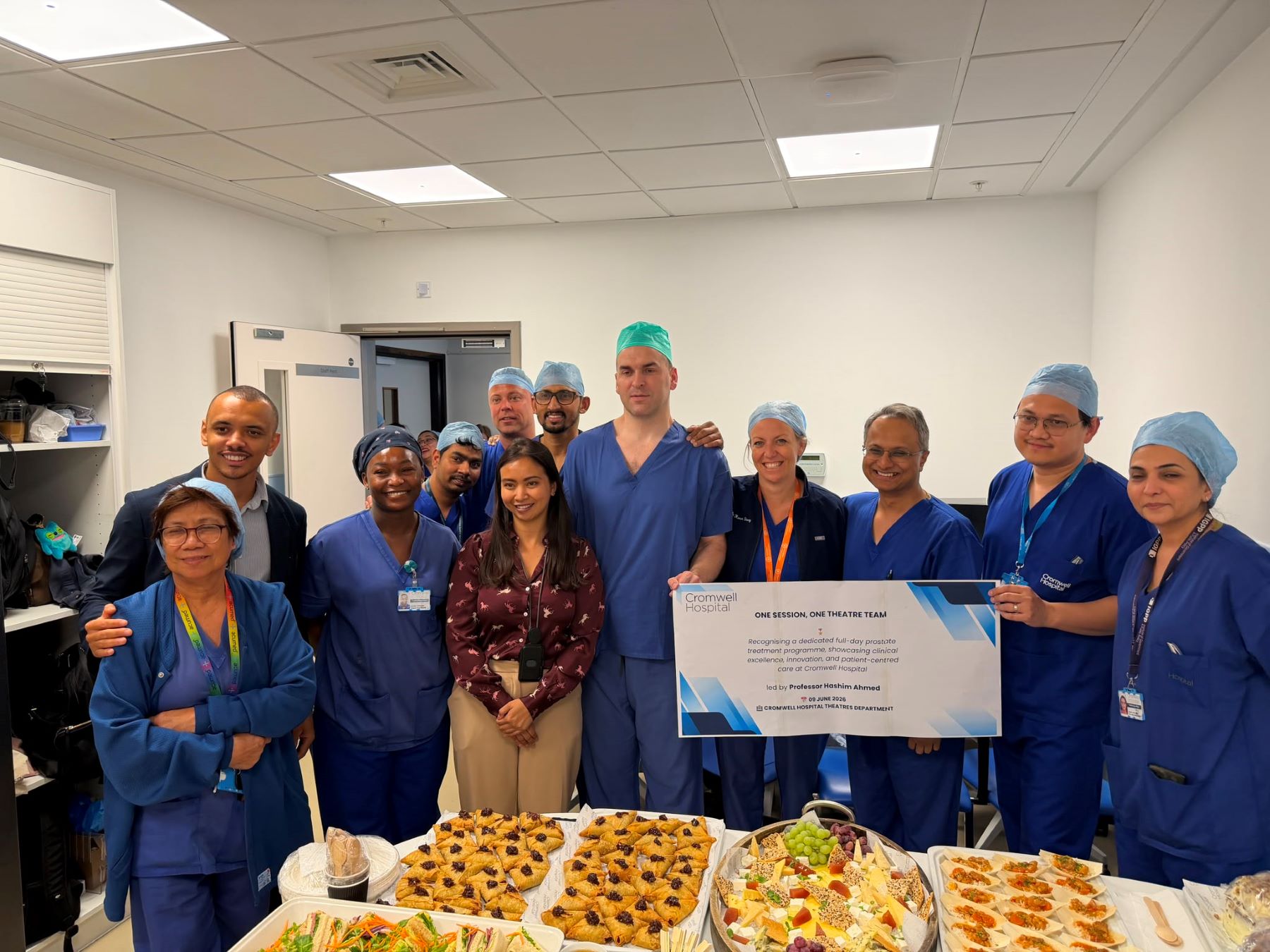
 Cromwell Hospital has reached an important milestone in its Urology service, delivering a highly specialised programme of procedures in a single day for the first time.
Led by internationally recognised urologist Professor Hashim Ahmed, the team carried out a series of procedures including six MRI fusion biopsies, one transurethral resection of the prostate (TURP), and three high-intensity focused ultrasound (HIFU) treatments. This reflects the hospital’s growing expertise in advanced prostate cancer diagnosis and minimally invasive treatment.
The success of the day was made possible by the teamwork and coordination of the multidisciplinary team. Their combined expertise ensured that every stage of care – from imaging and diagnosis to treatment planning – was delivered smoothly and to a high standard, with a strong focus on personalised care for each patient.
Professor Ahmed highlighted the importance of increasing access to these treatments: “It will be great to offer patients under my care an all-day list and the flexibility that goes with it. The popularity of focal therapy for prostate cancer continues due to its five- to tenfold lower risk of side effects, and I am excited that the international flagship service for this treatment at Cromwell continues to grow in strength.”
This milestone is another step towards Cromwell Hospital’s ambition to become a leading centre for targeted MRI fusion biopsies and advanced prostate cancer care. By offering a full range of diagnostic and treatment options, the hospital ensures that patients receive care suited to their individual needs while recognising that not all patients require or are suitable for robotic-assisted surgery.
Professor Ahmed’s leadership has been instrumental in advancing the service. He is internationally known for his work in prostate cancer diagnosis, imaging, targeted biopsy techniques, and minimally invasive treatments such as HIFU and cryotherapy. These treatments can be used as whole-gland or focal therapies, offering effective options for both primary and recurrent prostate cancer.