
When endometriosis hides in plain sight: How advanced robotic surgery is helping women reclaim their lives
Read the latest patient testimonial from Kiran Sharma on her endometriosis journey and receiving treatment at Cromwell Hospital.
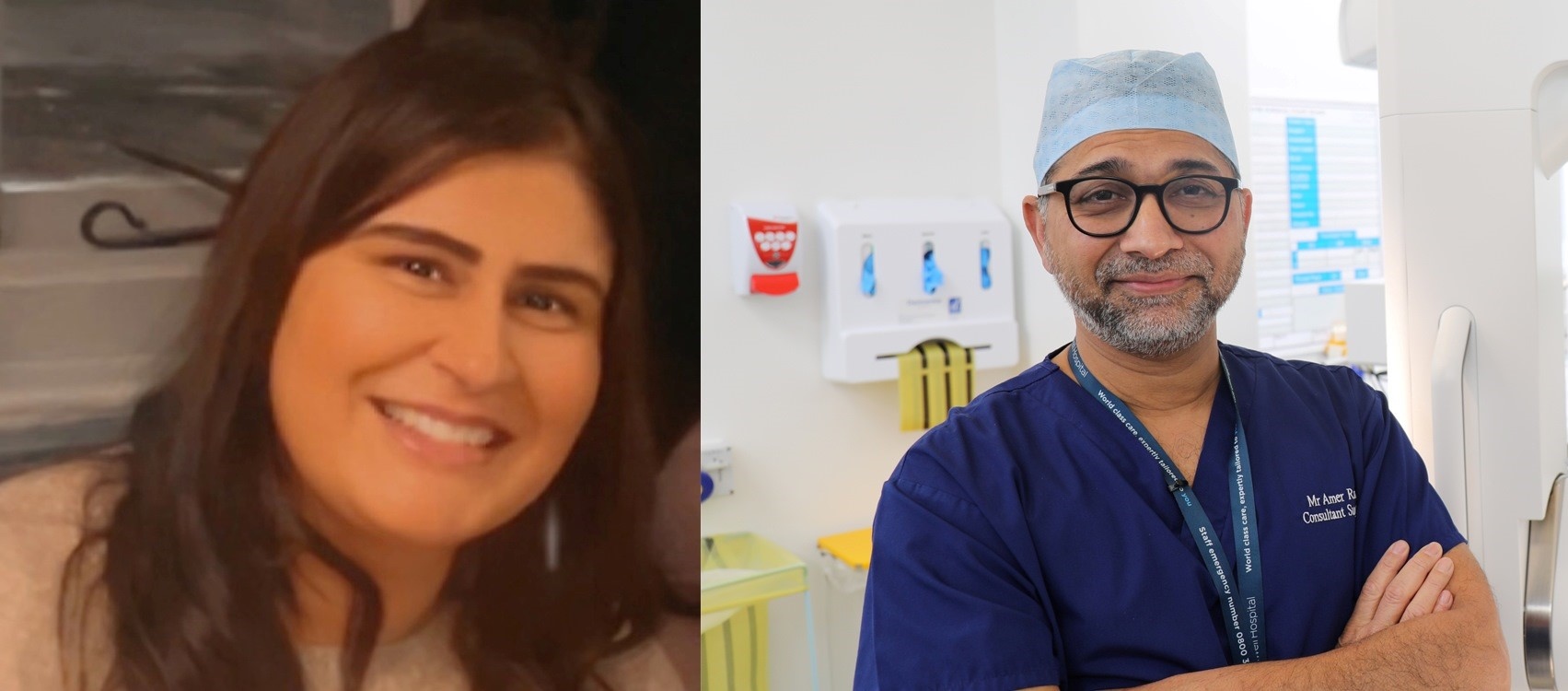
For many women, endometriosis is synonymous with years of painful periods, chronic pelvic pain, and a long struggle for diagnosis. Yet the condition does not always follow a predictable path. In some cases, it can progress silently, causing significant internal damage despite few obvious symptoms.
That was the experience of 40-year-old Kiran Sharma from east London. Her first indication that something was wrong was not pain or discomfort, but traces of blood detected during a routine urine test.
"I was asymptomatic for many years, so it was a shock when blood showed up in my urine tests," she recalls. "I couldn't see the blood myself, but my doctors told me to keep an eye on it. When it happened again, I had further investigations."
What followed was a series of scans, procedures, and specialist consultations that ultimately led to a diagnosis of severe endometriosis.
A condition that affects one in 10 women
Endometriosis affects around one in 10 women of reproductive age and occurs when tissue similar to the lining of the womb grows elsewhere in the body, most commonly around the ovaries, fallopian tubes, bowel and bladder. While many women experience debilitating symptoms, others may have little or no warning signs until complications arise.
Kiran's story highlights the complexity of the disease. What initially appeared to be a relatively minor finding during a routine investigation eventually revealed advanced endometriosis requiring specialist treatment.
Following complications after initial care and a subsequent hospital admission, surgery became the recommended option.
“Online reviews brought me to Mr Amer Raza’s team at Cromwell Hospital, and I decided to have an initial consultation with him.
The consultation was great; he explained everything clearly, showed diagrams and answered all my questions. I felt finally that I understood my condition and the options: medication, clearing endometriosis by surgery, or a hysterectomy with removal of endometriosis.”
Finding answers through specialist care
Facing a diagnosis of severe endometriosis can be overwhelming. Patients are often required to make complex decisions about treatment pathways while coping with pain, uncertainty and concerns about their future health.
“After some consideration, I decided on the hysterectomy. I wanted to have a permanent solution given how serious my symptoms had been and were and given the possibility of complications.”
Kiran's treatment was delivered through Cromwell Hospital's International Centre for Endometriosis, where gynaecologists, specialist nurses, imaging experts, and pain specialists work together to support patients with complex disease.
“For those who have been suffering with chronic pelvic pain or painful periods and have struggled to get a diagnosis and treatment, it can be really frustrating and isolating.” Mr Raza, Consultant Gynaecologist and lead of the International Centre for Endometriosis, shares.
“This is why we set up the International Centre for Endometriosis, to give patients rapid access to assessments, examinations, treatment, whether surgical or medical, and an ongoing plan to help manage the condition all under one roof.”
The role of robotic surgery in complex endometriosis treatment
In recent years, robotic-assisted surgery has become an increasingly important tool in managing gynaecological conditions including advanced endometriosis.
Robotic-assisted surgery is increasingly being used to treat complex cases of endometriosis, enabling surgeons to operate with greater precision while maintaining a minimally invasive approach.
Cromwell Hospital offers the latest robotic-assisted technologies, including the da Vinci Single Port, designed to help surgeons perform highly precise operations through small incisions.
Because the procedure can be performed through a small incision, many patients experience less postoperative pain and shorter recovery times than with more invasive techniques.
“The accuracy and precision of the da Vinci system works really well for keyhole procedures such as hysterectomies and complex endometriosis.” Explains Mr Raza, “It’s a fantastic system designed to perform complex operations through a single incision, giving us more options to suit our patient’s needs and reduce their pain and recovery time.”
Compared with her earlier laparoscopic surgery, Kiran's recovery was smoother and faster. Beyond the physical healing, she was able to move forward with confidence, free from the symptoms and uncertainty that had dominated her life.
“Recovery, for the most part, was much faster than my previous laparoscopic surgery in February - just one small incision, which meant less external pain and faster healing, though I did experience some fatigue.
I want to let everyone in a similar situation know that it's okay to be scared about major surgery, but I found having clear information and compassionate care makes a huge difference. I'd encourage anyone facing similar challenges to research, ask questions and find doctors who listen, like Mr Raza and the team at Cromwell Hospital.”
Improving outcomes through specialist care
Kiran's experience is a reminder that endometriosis does not always present in expected ways. While painful periods and pelvic pain are common symptoms, some women may have few warning signs until the disease has progressed. For specialists, improving awareness and access to diagnosis remains one of the most important challenges in endometriosis care.
"Early diagnosis and individualised treatment can have a profound impact on a patient's quality of life," Mr Raza says. "The sooner we can identify endometriosis, the sooner we can help patients access the support and treatment they need."